Tuesday, 30 August 2016

Late August promise

The business end of August has now arrived and so far seems to have been dominated by false starts.
Castle Hill on 23rd finally saw us getting in on the Willow Warbler action with at least 45 present, although with a distinct lack of any variety I assume most were of British origin.

A change in weather loomed and so on 25th with the promise of light northeast wind and drizzle, I found myself on Castle Hill for 07.30am.
A meander down the north side produced half a dozen Willow Warbler but nothing else. Round Marine Drive wall was birdless until I arrived at the ‘booted’ plantation. A skulking warbler in there eventually gave itself up and materialised into a juvenile Whitethroat.
The sea was rather productive, at least it was after the low cloud lifted, so I stuck around there for a few hours, in that time I actually had a rather respectable sea-watch with several decent species including the first Caspian Gull in Scarborough during 2016, a fine 1st year bird that passed north close in at 09.58am.
Also logged were Sooty Shearwater, Balearic Shearwater, 218 Teal, 20 Wigeon, 12 Redshank, Whimbrel, 2 Arctic Skua, Great Skua and 20 Common Tern.

During my sea-watch I logged 4 Willow Warbler, all of which arrived in off the sea and dived into the ‘booted’ plantation before filtering off.
With renewed optimism I gave both the north and south sides a decent look over but still came up empty handed. About 16 Willow Warbler were present in all.
This was to be the last time I would make it out due to the nature of my job and the bank holiday weekend fast approaching, there was one thing though that kept me going throughout the Friday and Saturday graft, knowing I had Sunday off, and with the forecast looking great for the Sunday I wasn’t complaining too much.

I finished work on the Saturday night (well Sunday morning) at 01.30am and even managed to fit in a well-earned pint or two of Heineken before grabbing a precious few hours before the alarm rudely awoke me.
A few minutes after the silence button was used the realisation of its reason for being set entered my head and I shot (slowly dragged) myself out of bed and towards the kettle.
You can always count on a nice cuppa to motivate you further and by 08.00am I was on Castle Hill full of optimism.

Unfortunately it transpired that the weather forecast was wrong (shock horror!) and so searching for migrants in grim persistent drizzle, at times heavy, was a little pointless, I did manage to pull out singles of Wheatear and Whitethroat behind the Marine Drive wall.
The sea was thankfully rather active, at least it was after the low cloud lifted a little, a few duck, waders and 3 Arctic Skua past in quick succession made for an easy decision, Long Nab.
Over the course of the sea-watch a rather respectable list was amassed, highlights being a Pomarine Skua and 2 Black Tern south as well as the 27 Arctic Skua south, with another 2 north.
Other noteworthy records were 9 Wigeon, singles of Pintail and Shoveler, 295 Teal, 199 Common Scoter, 1 Little Egret, 28 Knot, 2 juvenile Yellow-legged Gull, 46 Sandwich Tern, 45 Common Tern and a single Arctic Tern.

The next day was bright, sunny and warm. Perfect conditions to search for all those migrants that arrived in yesterday’s terrible conditions, well that was my thought process!
In truth it didn’t pan out that way.
Castle was dead while a Lesser Whitethroat on Scalby Nab was likely a local bird. In Jackson’s Bay there were 5 Sanderling, 5 Dunlin and 2 Ringed Plover among small numbers of Oystercatcher and Redshank.
Ravenscar at least provided a little more interest with 4 Willow Warbler, a Garden Warbler, 3 Whitethroat and a Whinchat as well as Meadow Pipits in fairly decent numbers, now building up waiting to head south in the next decent southwesterly blow.

Yellow-legged Gull with Common Terns

Teal and Wigeon on the move
Whitethroat -trying to act rare at first

Wheatear

Tuesday, 9 August 2016

More late July wader action

The 20th July was a pretty good, if rather long, day in the field with a very autumnal feel to proceedings.
With the warm nights I haven’t been sleeping too well and after finishing work at around 01.00 followed by a couple of hours of broken sleep I set out early and was in North Bay counting north bound Black-headed Gulls by 04.45!
The light was poor but once I had positioned myself on Scalby Nab I was rewarded for my early start almost instantly with 2 Avocet heading south, a species I had all but written off this year, it’s only the 3rd autumn record, the last being 3 I had south off Marine Drive on 24th July 2014! Those birds were quickly located at Filey Dams while these two arrived at Thornwick pool at Flamborough later in the morning.

By 06.00 I had made it as far as Long Nab and joined Chris. My walk north produced juvenile Stonechat, a fifth was on the wires behind the hut!
The rest of that morning was very entertaining with wildfowl and waders moving, at times in decent numbers. 20 Manx Shearwater were logged but rather unexpected were the first 2 Sooty Shearwater of the year, both heading south.
Wildfowl totals for the day were 1 Wigeon south, 2 Mallard north, 47 Teal south 19 north, 1 drake Pochard north, 3 Tufted Duck south, 83 Common Scoter south 506 north.
While southbound wader totals were 3 Black-tailed Godwit3 Whimbrel4 Curlew26 Redshank, 2 Turnstone69 Knot22 Sanderling and 57 Dunlin.
A single adult Mediterranean Gull passed north while 131 Swift29 Sand Martin and 2 Flava passed south.

A few slower days since have produced small numbers of the waders mentioned above, that was until a short watch from Marine Drive during the evening of the 24th over high tide.
Passing south there were 23 Oystercatcher7 Black-tailed Godwit7 Whimbrel3 Redshank5 Turnstone30 Knot33 Sanderling153 Dunlin and the highlight – an adult Curlew Sandpiper at 19.21.
Only my 4th personal Curlew Sand in the Scarborough District, all of which have been seen passing by offshore, three of which have been of Marine Drive! Viewing passage waders from here offers the best views with birds pretty much at eye level and often much closer than they are off Long Nab.

Black-headed Gull heading south along Marine Drive

This week also saw my juvenile Great Black-backed Gulls fledging, only the 3rd Yorkshire breeding record for this species, all of which have occurred in Scarborough with this same pair successfully fledging one from my Flat last year. At least I can now safely leave my home without dodging the brute of a male protecting his juvs!

One of the two juvenile Great Black-backs a few days before fledging

Tuesday, 26 July 2016

And so it begins...

The first week of July for me has been rather enjoyable with bits of interest passing through on every visit to Long Nab, however it was often lacking that little bit, volume of birds mainly, waders were moving but with only ones and twos added to the notebook each hour it was often painfully slow.
With a few more bits moving through during Nick’s watch on the evening of the 9th I met up with him at 06.15 on the 10th and began another Long Nab watch.

And okay so nothing was moving in huge numbers, not that I expected them to be but it felt that little bit better, it felt like we were getting closer to those good days.
Some of the highlights were a Little Egret north, an Oystercatcher48 Whimbrel2 Curlew and a Greenshank, and a juvenile Cuckoo south.
But the main feature was Swifts and Sand Martins heading south, with 920 of the former and 498 of the latter, that being the 2nd largest Sand Martin movement through Long Nab.

Cuckoo - Long Nab

Although rather slow at times the 11th proved to be a much better day. On my arrival at Crook Ness at 05.50 Swifts were moving south in good numbers, within 15 minutes I had clicked over 350 but a small shower arriving in from the southwest killed it off, very few were added thereafter, my final total was 390.
Sand Martins were still on the move in good numbers with a further 177 heading south.

With little action going on behind the hut inland it meant I could focus on the sea. Throughout the full watch a rather respectable list was amassed, but don’t be fooled, there were some very slow periods.
The first July record of Pale-bellied Brent Goose for Scarborough was of a single flying south, it was later seen past Flamborough and was surely the same bird seen arriving in at Beacon Ponds at Spurn during the evening.
Two adult Mediterranean Gulls flew north throughout the day, the first at 06.09 and the other at 08.38. A fine adult Little Gull flew south rather close in, a Red-breasted Merganser flew north and what was possibly the Little Egret seen heading north yesterday flew south today.
A single Common Tern passed south, an Arctic Tern flew north, as did a pale morph Arctic Skua.


Little Gull - Long Nab

Other interest was provided by waders, Redshank were the most numerous with 33 south, also recorded were 1 Oystercatcher, 2 Whimbrel, 3 Curlew, 2 Dunlin, 7 Knot and a Turnstone.

A slow watch on a day I expected action was a little frustrating, although in the 8 hours I persevered I did log a few bits of interest, most noteworthy of all was a flock of 7 Little Egret that flew north just under a mile offshore, a new day record count for Long Nab following 5 I had fly north there on 14th July last year, a year and a day earlier!
Also worthy of mention was a Velvet Scoter that flew north as well as 113 Common Scoter and 7 Teal, 22 Cormorant and a Great Skua which did the same.
Waders on the move included 3 Curlew north, 5 Whimbrel north, 2 south and 3 Oystercatcher south. Inland 64 Swift and 87 Sand Martin moved south.
My walk home produced a fine juvenile Dunlin in North Bay.


Little Egrets - Long Nab
Sand Martin - Long Nab
Dunlin - North Bay

Tuesday, 12 July 2016

Late June/early July

The end of June was fairly quiet, hints of Swift passage and wader movement began to creep in with a few more rather autumnal feels to days at Long Nab.

Wednesday 22nd produced 98 Swift south, 6 Curlew in off and south, an Arctic Tern north and Common Scoter numbers were 81 north and 39 south.
The Sedge Warbler was still holding territory in Crook Ness.

Offshore on the 29th - Common Scoter were passing by in rather decent numbers, 392 north and 52 south, other wildfowl on the move included 12 Wigeon north and 3 Teal north plus 7 south.
Curlew were on the move with 40 south 9 north, the southbound birds brought with them the first 5 Whimbrel of the autumn too.

Highlight of the day though was a Little Tern that flew north close inshore at 10.10hrs, not a particularly easy bird to catch up with in Scarborough with on average only 1 – 2 records a year. It is unsurprisingly the first of 2016 in and takes the Scarborough District year list on to a healthy 204.
Ten summer plumaged Black-headed Gull flew north offshore with a further 6 feeding out in Burniston Bay.

Inland Swifts were steadily moving south with 252 logged. A single House Martin and 3 Swallow also passed south.
The first Corn Bunting for the Nab of the year was calling away on the wires behind the hut briefly before moving off south.

I was again at Long Nab on 6th, 7th and 8th of July with all days providing plenty of interest.
The 6th saw a few duck on the move north, a Gadwall, 4 Teal and 64 Common Scoter while wader interest was provided by 3 Oystercatcher south, a Bar-tailed Godwit north, 13 Whimbrel south and 7 Curlew south 31 north. A trickle of Black-headed Gulls coming in from the east and heading north numbered 54 by the time I left, 4 Arctic Tern and an Arctic Skua headed north.
Inland things were pretty quiet, heading south were 4 Swift, a Sand Martin, 3 Swallow, a Flava and 2 Grey Wagtail.

The 7th was an improvement. An early surprise was a fine male Whinchat with 2 accompanying juveniles that moved south along the cliff top. Swifts were the main feature with 994 logged during my time there, the movement just stopped at around midday, frustrating that the 1000 mark was just out or reach. Sand Martins were also moving through in steady numbers with 66 south.
Offshore things were a little quieter, 9 Whimbrel and 6 Curlew flew south and 16 Teal and a Common Tern headed north. Highlight was the first returning Mediterranean Gull of the autumn, a fine adult summer that came in and flew north.

Swifts were moving but in fewer numbers on the 8th with only 447 however Sand Martins were still steady with 82 through.
Waders consisted 3 Whimbrel, 4 Oystercatcher, and singles of Dunlin and Ringed Plover south.
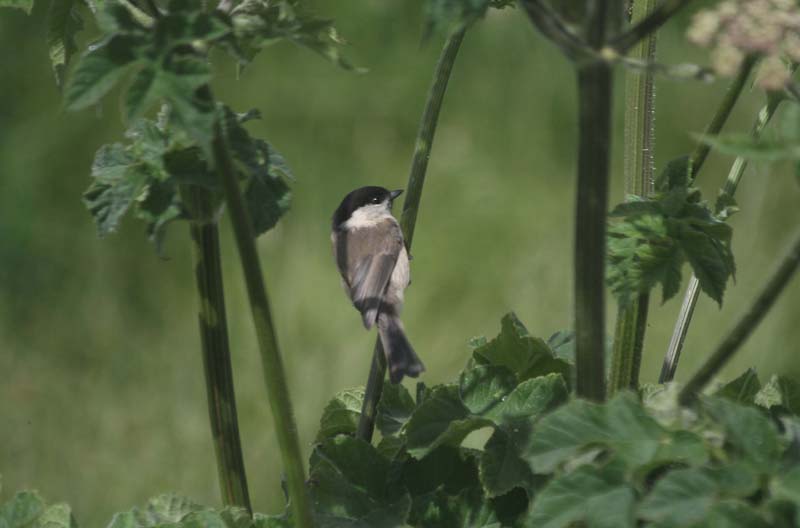
Even more surprising than the Whinchats yesterday was a Willow Tit that just appeared in the grass by the hut, hung around for a minute or two, and then moved off south along the cliffs. Only the fourth record of Willow Tit for Long Nab following the bird we trapped in early spring this year and two trapped in the autumn of 2013, all of which were only ever seen in the ringing plantation!


Whinchats by the hut
Swifts passing through
Swift passing the hut
Willow Tit
Willow Tit

Thursday, 9 June 2016

Spring finale

So with Spurn seemingly having a great time late on this spring I made the effort to check Castle Hill, on Tuesday 7th, in an attempt to squeeze one last good bird from the spring.
I wasn’t expecting much but the hope was there (as ever), maybe there would be a Marsh or Icterine Warbler blasting song out or perhaps even a Bee-eater calling whilst drifting over, I had to try.

Good numbers of young birds were all I had seen on my walk - the whole of the south side and most of the north. I took a rest on the bench on the plateau on north side overlooking North Bay, a few Sandwich Tern were patrolling the calm waters but that was about it.
I had to check behind Marine Drive wall, surely it would be devoid of migrants but I couldn't not check it when I was this close. Almost on auto pilot I walked through noting that the pair of Rock Pipit now had at least two fledged juveniles in tow as well as a few Painted Lady and the odd remaining Diamondback Moth.
As I approached the now legendary ‘Booted Plantation’ I barely gave it any attention and instead looked out at sea. Auks were passing by but very little else was.
With the sound of the sea and the sun beating down I was feeling rather relaxed and was half tempted to have half an hour laid on the grass (it wouldn't have been the first time) when the call of a GREENISH WARBLER from behind me perked me up no end!
I turned round to catch the arse end of it flick through the plantation and along the grass bank a few meters before disappearing.
Camera at the ready I was in hot pursuit and soon located it in the small Sycamore where I was able to get a few nice views. Unfortunately it didn't stay there long enough for any shots and was again off in the direction of the Skate Park on the north side. I was able to get a couple more views of it in the grass before it made it so far it could clearly see the well wooded area of Castle Hill and within seconds it had vanished!
Based on the behaviour I think it had literally just arrived, I have been at the ‘Booted Plantation’ when a Yellow-browed Warbler (as well as numerous common migrants) arrived and did exactly the same, including the brief stop in the Sycamore!

I gave it half an hour trying to relocate the bird but if you have even seen Castle Hill you know what it’s like! Plus I had work – again.
This is Scarborough’s eighth Greenish Warbler since the first in August 1984, it’s only the 2nd spring record for the area too following a singing bird I found on Castle Hill on 28th May 2013.

After Tuesdays success I planned to once again get out on Wednesday in the hope of squeezing another last bird out of the spring, surely it wouldn't happen again.
To cut a short story shorter it didn't!

In fact it was rather a poor morning out. The thick sea fret, at times dropping visibility to 30 meters hampered efforts for the first hour or so. Once clear a few odds and sods were noted passing at sea, a few Puffin, Sandwich Tern, Common Scoter, Manx Shearwater and 11 Canada Geese, before a walk round Long Nab was in order.
In truth it was terrible, a typical June walk around, no migrants found!
Maybe that’s it for spring? At least for me.
Or maybe the south easterlies at the weekend will help that last good bird drift in?!


The pea souper off Long Nab early on
It eventually cleared

Tuesday, 7 June 2016

Early June

June has arrived and with it the spring has all but finished, although some light variable winds next week with some hint that easterlies may be involved could produce that last surprise or two.
With the end of the spring here (or almost here) it at least means that in about three weeks the beginning of the autumn will be marked by the first southbound waders returning from the Arctic moving past offshore, something I really look forward to each year.

Avian wise there may well be very few, if any, new in migrants in Scarborough however if its moths you like then you’d be in heaven!
Diamondback Moths have arrived in force in the Scarborough area, and the UK as a whole, just recently with presumably hundreds of millions (perhaps even more?) involved.

Of course there have been loads everywhere, including many floating around my head in the office at work on Friday and Saturday night.
Sunday 5th saw me, along with Nick, up at Long Nab, despite it saying 5th June on the calendar the weather forecast didn’t pay attention, with that northerly wind still blowing it made for a fresh watch from the Hut, gloves were in use!
Typically it was quiet, highlights (in the loosest possible term) were 12 Manx Shearwater, 87 Common Scoter, 2578 Auk sp and 129 Puffin all north during the three and a half hours we stuck it out.

As expected Diamondbacks were present, keeping low in the tall vegetation, although with numbers far lower than recorded on previous dates many have either moved off inland, died off or provided the numerous young birds in the area with an east, although I imagine not too satisfying, meal.


Diamondback
Diamondback

Saturday, 4 June 2016

There’s always tomorrow.

Unfortunately due to a rather long shift on Thursday I couldn't get out into the first day of the forecast easterlies, stressful to say the least with Steve dropping on a female Red-backed Shrike on Castle Hill and Nick doing the same at Long Nab, not to mention hearing reports from elsewhere along the coast of migrants arriving!

Finally though I finished work at about 01.00 and after uploading Thursdays sightings on to Scarborough Birders I got a few valuable hours kip before meeting Chris at 06.30 in Town before leaving north to Long Nab with the ringing gear in tow.
Arriving at Hundale at 06.45 we quickly got ourselves sorted and soon had 5 nets up, all before 07.30 with the first bird ringed at 08.00.

Unfortunately it was quiet, with no evident migrants in and the few birds we were catching were either re-traps or the odd Finch or Whitethroat we had missed previously.
It wasn’t long before the net rounds produced nothing at all and so we slowly began to wander further around the netting site in the hope of finding something to provide encouragement.

Whitethroat
Eventually after another almost blank net round we split up and walked some of the area.
I walked south along the Cleveland Way, along ‘Long Hedge’ and towards the ‘White House’.
hadn't come across a single migrant during my walk, that was until I reached the ‘White House’ from here I heard the faintest snatch of song – an acro.
At first it was distant and didn't give much away, Chris left Hundale and joined me.
hadn't seen or heard it for a few minutes by the time he had arrived, although I had seen it fly across the field and back into thick cover from where it promptly shut up.

After another few minutes it flew a little further into the trees in the garden of the ‘White House’ and began to feed in a small tree often giving brief views and another snatch of song, this time close enough to hear properly – it was just a Reed Warbler.

It did provide a little encouragement that there maybe a few migrants arriving so we headed back to Hundale with thoughts of all sorts of goodies in the nets – predictably there weren't any!

Another couple of blank net rounds resulted in us packing up and opting to work the area a little better.
Top plantation area was devoid of all migrants, I spent a little time watching a pair of Garden Warbler there. Chris at least had a little more luck with a Wheatear near the Cover Crop.

Garden Warbler

Crook Ness and the cliffs down to Cromer Point were also pretty quiet and produced nothing of any note.

With another night of work looming it was time to head home. Soon after arriving there news of another 2 Red-backed Shrike came through from Ravenscar – a tad frustrating! There’s always tomorrow – a phrase used in birding very frequently.

A new dawn, a new day, still light easterly winds with cloud cover and another early rise with Hundale in our sights again.
The nets were operational by 07.30, unfortunately it was again quiet with only one new birds caught all morning – a Goldfinch, along with half a dozen re-traps.

Yesterday’s Wheatear was still present between the Cover Crop and the ‘White House’ and was the only migrant noted in the area.
After admitting defeat we packed up, I left Chris to check Crook Ness and joined my old man on a trip up to Ravenscar. A sea fret there made birding difficult (at times impossible) and within an hour no new migrants were noted and both of yesterday’s Red-backed Shrikes had moved on.
With another shift at work that evening it was time for home!
As ever, there’s always tomorrow…..